Male Aesthetic Surgery

Gynaecomastia & Male
Body Contouring Surgery

Mr. Blackburn treats a growing number of male patients seeking discreet, expert surgical care. Whether the concern is enlarged breast tissue (gynaecomastia), stubborn abdominal fat, or excess skin following significant weight loss, he brings the same precision, honest counsel and high standards to male surgery that define his work across all areas of his practice.

A Specialist Approach to Male Surgery

Male cosmetic surgery requires a specific understanding of male anatomy, chest wall proportions, fat distribution and the aesthetic goals particular to men. The skin of the male chest and abdomen is thicker and less forgiving than female skin, placing a premium on precise technique, appropriate scar placement and thorough pre-operative planning.

Mr. Blackburn is independently certified by the Intercollegiate Cosmetic Surgery Board (Royal College of Surgeons of England) in both cosmetic body contouring and body contouring after massive weight loss. His training and experience span the full range of body contouring procedures in both male and female patients.

Many men delay seeking help for gynaecomastia or body shape concerns for years, often due to embarrassment or uncertainty about whether surgery is appropriate. Mr. Blackburn's consultations are straightforward and non-judgemental, and he is happy to see patients who simply wish to understand their options before making any decision.

Am I Suitable for Surgery?

Most men presenting for body contouring or gynaecomastia surgery are in good general health, at or near a stable weight, and have specific areas of concern that have not responded to exercise or diet. Being at a stable weight before surgery improves both the result and the recovery.

For gynaecomastia specifically, it is important to exclude any underlying hormonal cause or medication effect before proceeding to surgery. Mr. Blackburn will take a full history and may request relevant blood tests or an ultrasound as part of the assessment where indicated.

Referral not required. Self-referrals are welcome. If you would prefer a GP referral, Mr. Blackburn's practice can also accept these. All enquiries are handled confidentially by his practice manager, Simone Fortescue.

Male Surgical Procedures

Mr. Blackburn offers a focused range of male body contouring and breast procedures, each planned and performed with the same attention to detail and aesthetic judgment that defines his broader practice.

Gynaecomastia Surgery (Male Breast Reduction)

Gynaecomastia — the benign enlargement of breast tissue in men — affects a significant proportion of men at some point in their lives, most commonly during puberty or in middle age and beyond. It can range from a small, firm disc of tissue immediately beneath the nipple to more generalised breast enlargement, and frequently causes considerable self-consciousness, affecting confidence in everyday activities, sport and intimacy.

The surgical approach depends on the composition of the enlarged tissue. True gynaecomastia (in which glandular tissue is the primary component) requires direct excision, typically through a short periareolar incision placed precisely at the border of the areola, where the scar heals with minimal visibility. Pseudogynaecomastia (predominantly fatty tissue) can often be treated by liposuction alone. In many cases, a combination of liposuction and glandular excision produces the best contour, flattening the chest and restoring a masculine breast shape.

The periareolar scar is chosen because it lies at a natural colour junction and heals exceptionally well. Mr. Blackburn plans incision size and position carefully to minimise visibility, and uses the same layered, scar-conscious closure technique applied to all his procedures.

  • Glandular excision via short periareolar incision
  • Liposuction to address fatty component and blend chest contour
  • Combined approach where both glandular and fatty tissue are present
  • Skin tightening where there is significant skin excess
  • Assessment and management of any underlying hormonal or medication cause
  • Compression garment worn post-operatively for 4–6 weeks
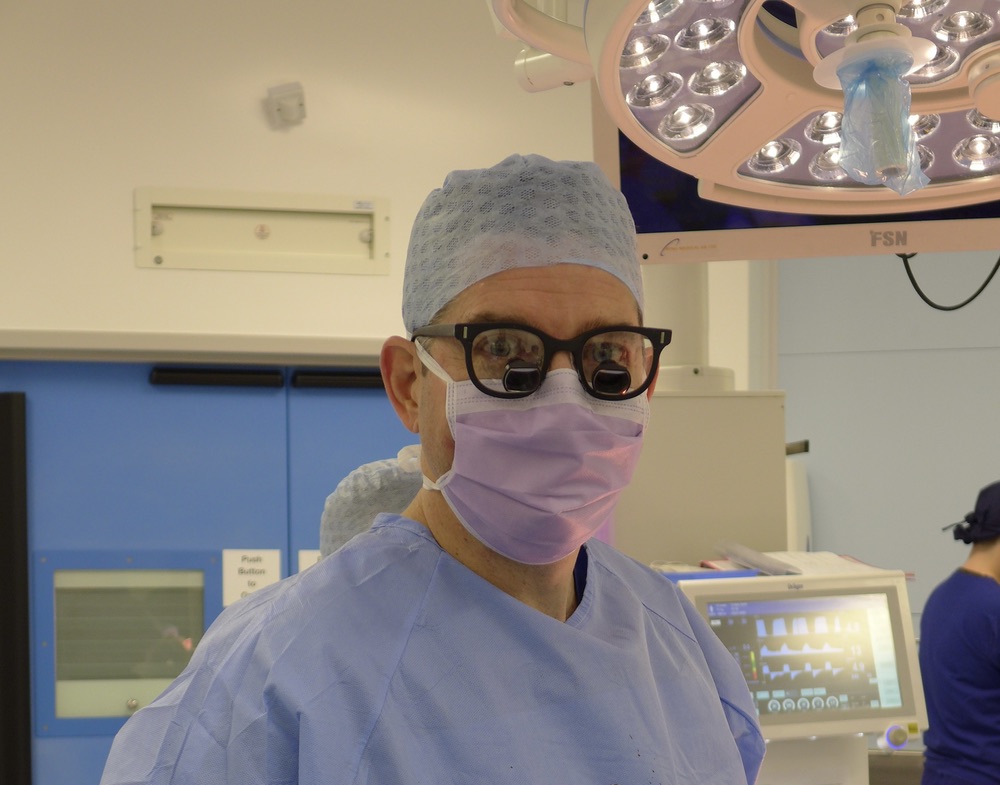
Gynaecomastia Surgery
AnaestheticGeneral (or local for minor cases)
Duration1–2 hours
Hospital stayDay case
Return to work1–2 weeks
ExerciseAvoid for 6 weeks
Full result3–6 months

Male Liposuction & Body Contouring

Men commonly develop localised fatty deposits in the abdomen, flanks (love handles), chest, and neck that prove resistant to diet and exercise, often as a result of genetics or the hormonal shifts of middle age. Liposuction removes these deposits through small incisions, using a fine cannula to sculpt a more defined, proportionate silhouette.

The aesthetic ideal in male body contouring differs from female surgery: the goal is typically a flatter, firmer abdomen, a more defined waistline and the reduction of prominent flanks, rather than the curves pursued in female procedures. Mr. Blackburn tailors his approach to the specific anatomical distribution of each patient's fat and the masculine contour they wish to achieve.

Liposuction in men can also be used to treat the fatty component of gynaecomastia and to contour the chest more broadly, blending the result with any glandular excision performed at the same time.

  • Abdomen, flanks, chest and neck — commonly treated areas
  • Sculpts a flatter abdomen and more defined waistline
  • Suitable for men at or near stable weight with localised deposits
  • Often combined with gynaecomastia excision in the same procedure
  • High-definition contouring available for appropriate candidates
Male Liposuction
AnaestheticGeneral
Duration1–3 hours
Hospital stayDay case or overnight
Return to work1–2 weeks
ExerciseAvoid for 6 weeks
Full result3–6 months

Male Abdominoplasty

Abdominoplasty in men addresses excess abdominal skin and fat that liposuction alone cannot correct — particularly in men who have lost significant weight or whose abdominal skin has lost elasticity with age. It removes the skin excess, tightens the abdominal wall where muscle separation (diastasis recti) is present, and creates a firmer, flatter abdominal profile.

The procedure in men is planned with the same care as in women, with the scar positioned as low as possible, ideally within the natural trouser or swimwear line. The approach is adapted for male anatomy, where skin thickness and distribution of residual fat differ from female patients. Mr. Blackburn will advise whether abdominoplasty, liposuction or a combination will produce the best result for each individual.

  • Removal of excess abdominal skin following weight loss or ageing
  • Repair of abdominal muscle separation (diastasis recti) where present
  • Scar positioned low within the waistline
  • Often combined with liposuction of flanks and abdomen
  • Suitable for men at a stable, near-target weight
Male Abdominoplasty
AnaestheticGeneral
Duration2–3 hours
Hospital stay1–2 nights
Return to work3–4 weeks
ExerciseAvoid for 8–12 weeks
Full result6–12 months

Post-Weight-Loss Body Contouring

Men who have achieved major weight loss — whether through bariatric surgery, dietary change or sustained lifestyle modification — frequently find themselves with significant excess skin across the abdomen, flanks, chest, arms and thighs. This excess skin can cause discomfort, skin irritation, hygiene problems and considerable distress, even in men who are proud of their weight loss achievement.

Post-bariatric body contouring for men may involve abdominoplasty, flank and back excisions, arm reduction (brachioplasty), thigh lift, and chest correction. Procedures are typically staged to allow safe recovery and to plan the sequence of surgery most effectively. Mr. Blackburn has specific certification in body contouring after massive weight loss and will work with each patient to develop a prioritised plan that addresses the areas of greatest concern first.

  • Abdominoplasty with flank and back extensions
  • Arm lift (brachioplasty) for excess upper arm skin
  • Thigh lift and medial thigh contouring
  • Male chest correction following major weight loss
  • Procedures staged to allow safe, effective recovery
  • Coordination with bariatric team and GP where appropriate
Post-Weight-Loss Contouring
AnaestheticGeneral
Duration2–5 hours per stage
Hospital stay1–3 nights
Return to work3–5 weeks
Full result9–12 months
Weight stabilityAt least 12 months recommended

Frequently Asked Questions

Answers to the questions Mr. Blackburn hears most often from men considering surgery.

What is gynaecomastia — and how do I know if I have it?

+

Gynaecomastia is the benign enlargement of breast tissue in men. True gynaecomastia involves a firm disc of glandular tissue beneath the nipple, which may feel different from the surrounding fat. Pseudogynaecomastia is softer and composed predominantly of fatty tissue. Many men have a combination of both. The key distinguishing feature of true gynaecomastia is a palpable, firm or rubbery disc of tissue beneath the nipple, which does not reduce with weight loss. Mr. Blackburn will examine you carefully at consultation and will recommend appropriate investigations if there is any uncertainty.

Does gynaecomastia surgery leave visible scars?

+

In the majority of cases, Mr. Blackburn uses a short periareolar incision — placed precisely at the lower border of the areola, where the darker skin of the areola meets the surrounding chest skin. This position heals exceptionally well, typically leaving a barely visible line. Where liposuction alone is used, only tiny port-site marks remain. Scar placement and quality are central considerations in Mr. Blackburn's planning for every procedure.

What causes gynaecomastia?

+

Gynaecomastia can be caused by the hormonal changes of puberty (most common, and frequently resolves on its own), the hormonal shifts of middle age, certain medications (including some antihypertensives, antidepressants, prostate treatments, and anabolic steroids), and less commonly by underlying conditions affecting hormone levels. In many men no specific cause is found. Mr. Blackburn will take a thorough history at consultation and may arrange blood tests or an ultrasound before recommending surgery, to ensure no treatable cause has been missed.

Is gynaecomastia surgery suitable for younger men or teenagers?

+

Surgery is generally recommended only once breast tissue has been stable for at least one to two years, as gynaecomastia arising at puberty frequently resolves without treatment. In younger patients, Mr. Blackburn will assess the degree of gynaecomastia, the impact on quality of life, and the stability of the tissue before recommending surgery, to minimise the risk of recurrence. Where surgery is indicated in a younger patient, he will ensure appropriate counselling and informed consent, including involving parents or guardians in younger teenagers.

What is the recovery from gynaecomastia surgery?

+

Most patients return to desk-based work within one to two weeks. A compression garment is worn for four to six weeks, helping to minimise swelling and support the healing tissues. Strenuous exercise and heavy lifting are avoided for six weeks. The chest will feel firm and may be tender initially; final results, including full resolution of swelling, are typically visible at three to six months. Mr. Blackburn's team will provide detailed written aftercare instructions and are available to answer questions throughout recovery.

What areas can be treated with male liposuction?

+

Male liposuction is most commonly performed on the abdomen, flanks (love handles), chest, and neck. It is best suited to men who are at or near their target weight but have localised fatty deposits that are resistant to diet and exercise. It is not a treatment for obesity or a substitute for weight loss. The best results are seen in men with good skin elasticity; where skin laxity is significant, abdominoplasty may produce a better outcome and Mr. Blackburn will discuss this at consultation.

How soon after bariatric surgery can I have body contouring?

+

It is generally recommended to wait until weight has been stable for at least 12 months before undergoing body contouring procedures. This allows the skin to contract as much as it will naturally, ensures nutritional status has recovered, and means that the surgical plan is based on a stable end point. Mr. Blackburn will liaise with your bariatric surgeon or GP as part of pre-operative planning, and will request recent blood tests to ensure nutritional markers (including iron, vitamin B12 and protein levels) are satisfactory before proceeding.

Book a Confidential Consultation

Mr. Blackburn offers straightforward, unhurried consultations at his clinics in Kingston upon Thames, Guildford, East Grinstead and Benenden. Self-referrals are welcome and all enquiries are handled with complete discretion.

Get in Touch